Cinematic AI Portrait Prompts: Lighting, Angles & Camera Settings
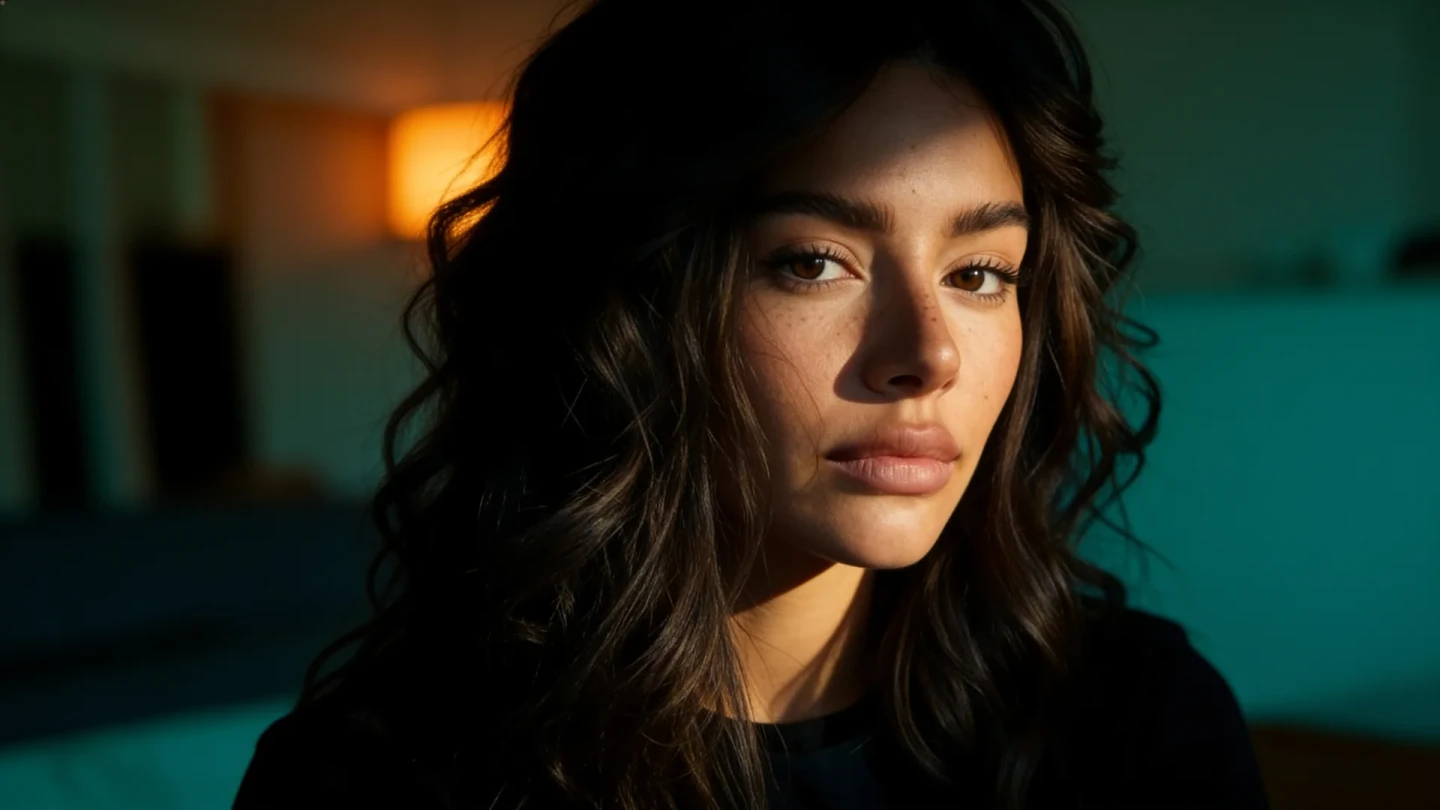
Cinematic portraits remain one of the most consistently popular AI image styles — dramatic lighting, shallow depth of field, and a sense of story in a single frame. The difference between a portrait that looks "cinematic" and one that just looks dark and moody comes down to specific, technical prompt language. Here's how to use it.
Lighting Setups That Read as Cinematic
Rembrandt lighting — a small triangle of light on the shadowed cheek, classic portrait technique that instantly adds depth and drama.
Backlit with rim light — subject lit from behind with a thin edge of light outlining their silhouette, often paired with haze or atmosphere for added depth.
Practical lighting — light sourced from within the scene itself (neon signs, lamps, car headlights) rather than an obvious external light source. This is what gives a lot of viral neon/noir content its specific look.
Hard directional light with deep shadow — a single strong light source creating high contrast and defined shadow shapes, often used for dramatic or moody portraits.
Naming the lighting setup specifically gets dramatically more consistent results than generic terms like "dramatic lighting."
Camera Angles Worth Knowing
Low angle — camera positioned below eye level, shooting upward. Reads as powerful, imposing, confident.
Dutch angle — slightly tilted frame, signals tension or unease, used sparingly for editorial-style content.
Over-the-shoulder — frames the subject from behind another implied presence, adds narrative tension even in a still image.
Eye-level close-up — the most intimate, direct option, best for emotionally engaging portraits.
Lens Language That Actually Matters
Anamorphic lens — produces the wide, slightly stretched bokeh and horizontal lens flares associated with film. Strong choice for moody, cinematic night scenes.
85mm portrait lens at f/1.4 — tight, flattering compression with extremely shallow depth of field. The default choice for clean, professional-feeling portraits.
35mm at f/2.8 — wider field of view that includes more environmental context while still keeping some background blur. Better for portraits that need to tell a story about location.
Color Grading Vocabulary
"Teal and orange color grade" remains one of the most reliable phrases for instant cinematic feel — it's the most common color grading approach in modern film and the model has seen it extensively in training data. Other reliable options: "desaturated, cool-toned grade" for somber or noir moods, "warm golden grade" for nostalgic or romantic tones, and "high contrast with crushed blacks" for a harder, more dramatic look.
Full Example Prompt
A man in his late 20s with short dark hair, eye-level close-up portrait, Rembrandt lighting with a single warm key light, shot on 85mm lens at f/1.4, shallow depth of field, teal and orange color grade, subtle film grain, moody atmosphere, 4:5 aspect ratio.
Putting It Together
The formula that separates flat portraits from cinematic ones is rarely about the subject — it's almost always about naming a specific lighting setup, a deliberate camera angle, a real lens and aperture, and a defined color grade. Combine all four and even a simple subject description will produce something with real visual weight.
Access 200+ curated prompts. New drops every week.
Start for $9.99/mo