How to Write Lifestyle Prompts That Actually Look Real
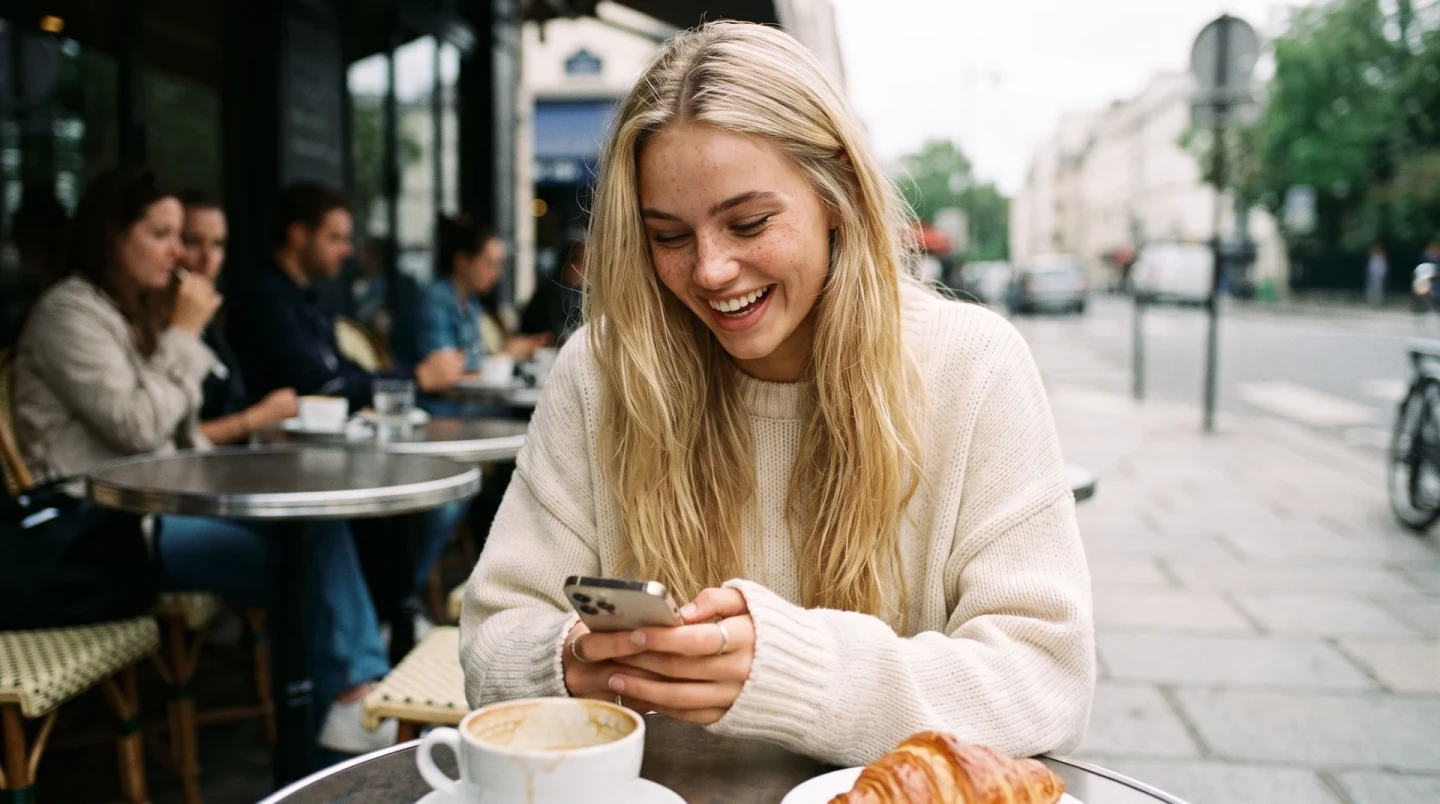
Lifestyle content is the backbone of most AI model accounts — coffee shops, morning routines, city walks, casual moments. It's also the category where the "fake AI look" is most obvious. Skin that's too smooth, poses that are too perfect, lighting that's too even. Here's how to avoid all three.
Why Lifestyle Prompts Are Harder Than They Look
Dramatic or stylized content (cyberpunk, fantasy, editorial fashion) gets a pass on hyperrealism because the whole point is that it looks produced. Lifestyle content lives or dies on believability — it's supposed to look like it could have been taken on someone's phone or by a friend with a decent camera. That means the prompt needs to actively work against the AI's tendency toward over-polish.
The Three Words That Fix Most Lifestyle Prompts
"Candid." This single word shifts pose, expression, and framing away from posed-portrait energy toward something caught mid-moment. Pair it with a specific action — "candid, laughing while looking off-camera" works far better than "candid" alone.
"Natural light." Avoid studio lighting language entirely for lifestyle content. "Natural window light," "soft overcast daylight," or "afternoon sun through a café window" all read as authentic in a way that "studio lighting" never will.
"Slight imperfection." Counterintuitive, but effective — a small amount of asymmetry, a slightly off-center composition, or "natural skin texture" in the prompt counteracts the model's tendency to airbrush everything into uniform smoothness.
Scene Specificity Beats Scene Variety
A common mistake is trying to make every lifestyle prompt wildly different. In practice, a handful of well-detailed, believable settings outperform a large number of vague ones. "Sitting at a small marble café table near a window, half-finished oat milk latte, soft morning light" will outperform "in a coffee shop" every time, because the model has concrete details to render rather than generic ones to invent.
Clothing and Styling Language
Skip brand names — they won't render reliably and can cause inconsistent results. Instead describe the silhouette, fabric, and color: "oversized cream knit sweater, relaxed fit," "high-waisted wide-leg denim," "minimal gold jewelry." This level of detail does more for realism than almost any other prompt element, because clothing texture is one of the first things a viewer's eye checks for AI tells.
Example Prompt
"A woman in her mid-20s with natural makeup and loose beach waves, sitting on a café patio in an oversized cream knit sweater, candid moment laughing while looking at her phone, soft overcast natural light, shallow depth of field, shot on 35mm lens, natural skin texture, 4:5 aspect ratio."
Avoiding the Three Biggest Tells
Symmetrical perfection. Real candid photos are rarely perfectly centered or symmetrical. A little compositional looseness helps.
Studio-clean backgrounds. Lifestyle scenes should have some visual noise — other tables, background blur, environmental texture. A completely clean background reads as generated.
Over-styled hair and makeup. Reserve full glam language for editorial or fashion categories. For lifestyle, "natural makeup," "minimal styling," and "effortless" keep things grounded.
Building a Lifestyle Library
If lifestyle is your core content category, it's worth building three or four signature settings (a café, a city street, a home interior, an outdoor space) and refining each one until it consistently produces believable results, rather than constantly inventing new locations from scratch. PoseLab's Lifestyle category is built around exactly this kind of tested, repeatable scene library.
Access 200+ curated prompts. New drops every week.
Start for $9.99/mo